




Exchange Nudge
Moving the exchange decision ahead of the return default, at AJIO scale. No tricks, no pressure.



/ Overview
Fashion e-commerce lives with high return rates, and every return costs twice: reverse logistics, plus the order value that walks out with it. I took over Post-Order without a handover, so I mapped the whole journey, its owners and its business rules before designing anything.
/ Project details
7 lakh+
returns turned into exchanges
+48%
growth in exchange share in 12 months
Crores
saved in reverse logistics a year
~1 in 4
platform exchanges came through this nudge
From order page to decision, in four screens
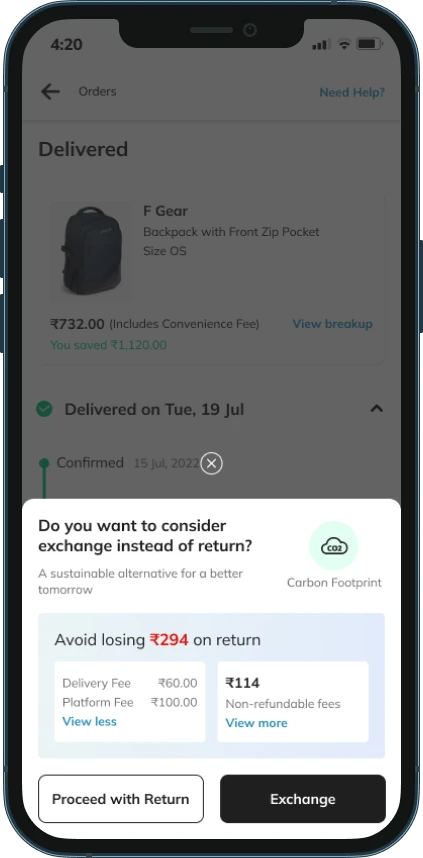
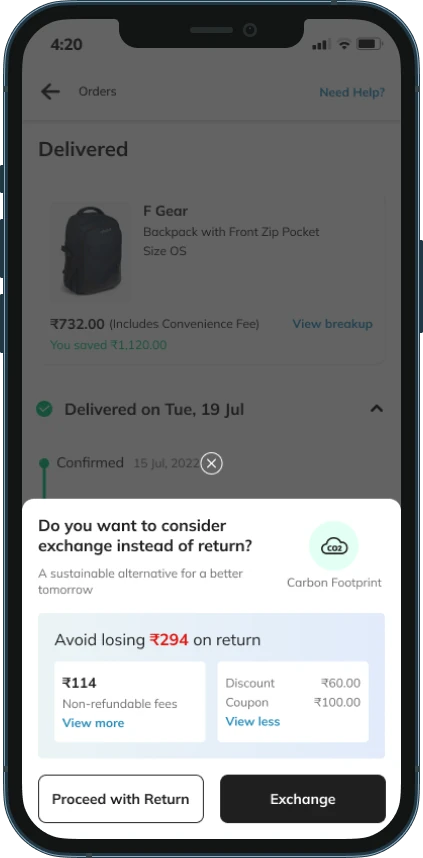
Exchange was always there. Users just weren't choosing it. Visibility wasn't the problem. Timing was.
Fast completion
Users finished the return flow quickly. They weren't confused; they had already decided.
A late question
“Return or exchange?” came after the address and reason were picked, deep in a return mindset.
How do we make exchange more visible?
How do we influence the decision before return becomes the default?
Rule out anything that doesn't respect the user's decision. Nudge only when exchange is genuinely better for that user, with honest numbers.
No forced CTA
Pushing exchange at the most sensitive moment would cost trust.
No coupons
They treat the symptom and set an expectation that can't be sustained.
No global banners
Shown to everyone, relevant to nobody.
First solve the behaviour. Add incentives only if the behaviour still needs them.
Five decisions.
One system.
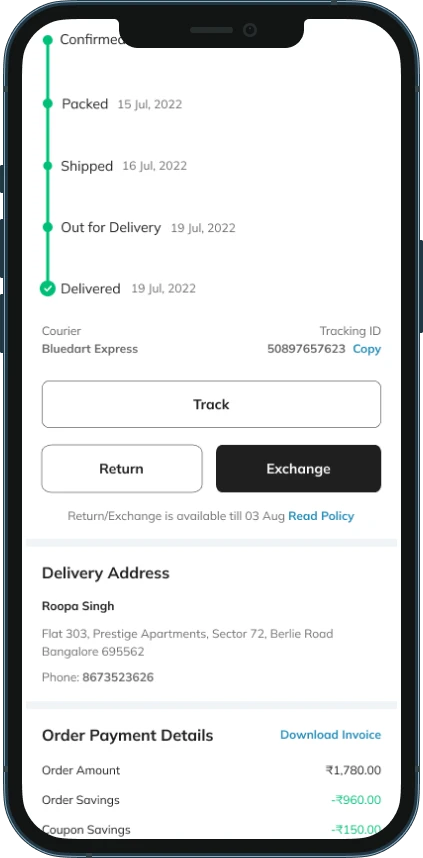
Split the entry point
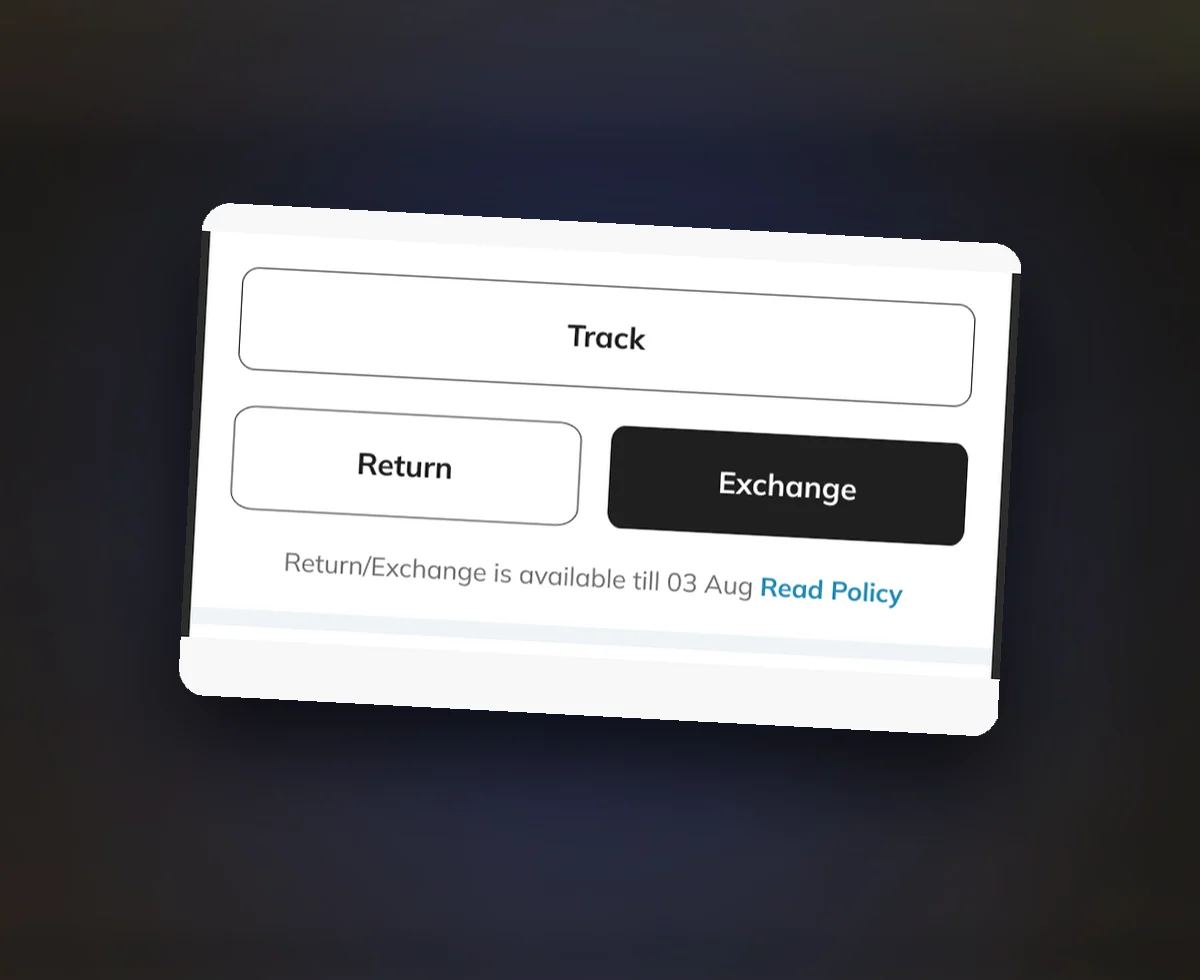
Return and exchange lived under one button. Two buttons on the order page moved the choice to the moment of intent. Every other decision depends on this one.
A decision, not a form
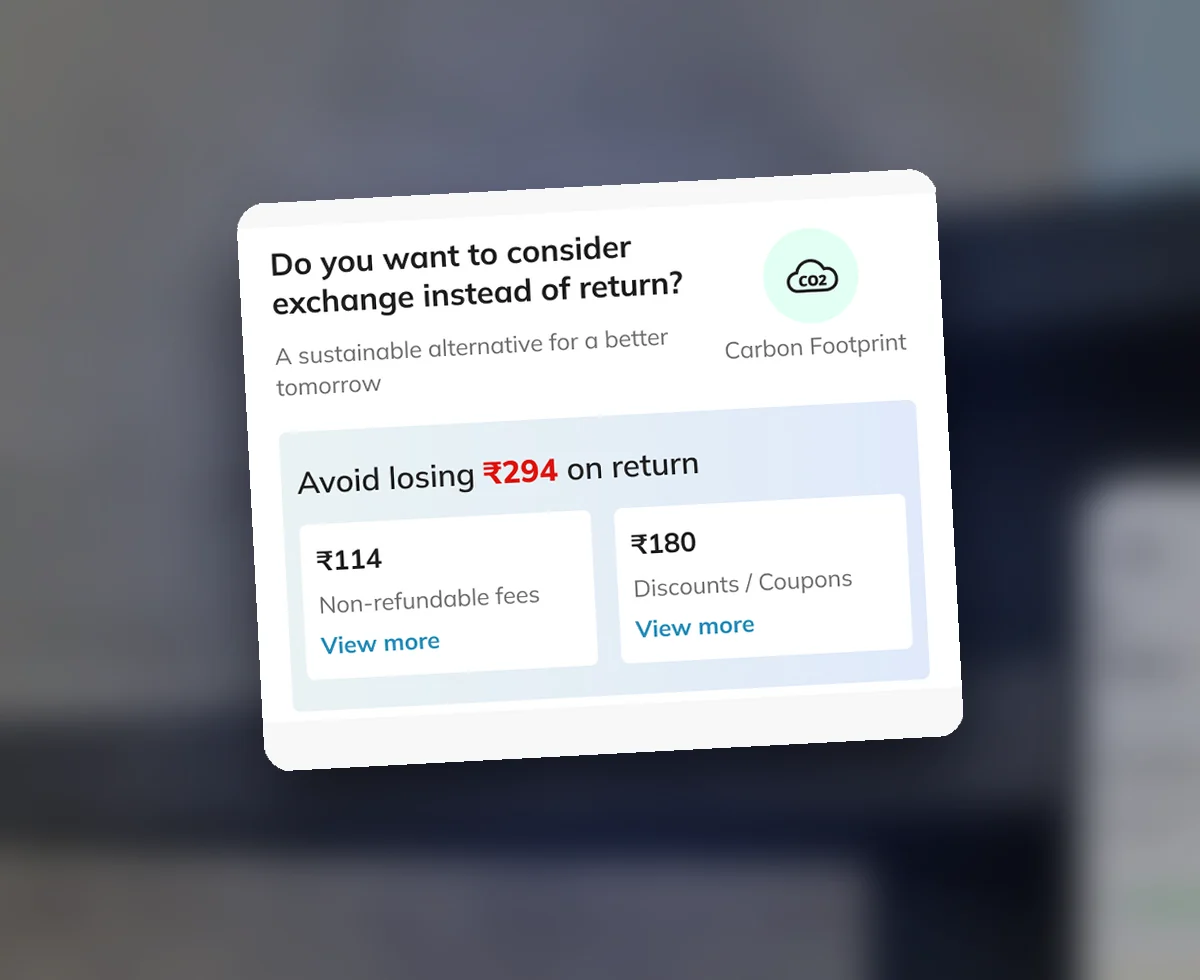
Shoppers start a return upset and distracted. Framing the step as a decision, not a form, created room for the nudge to work.
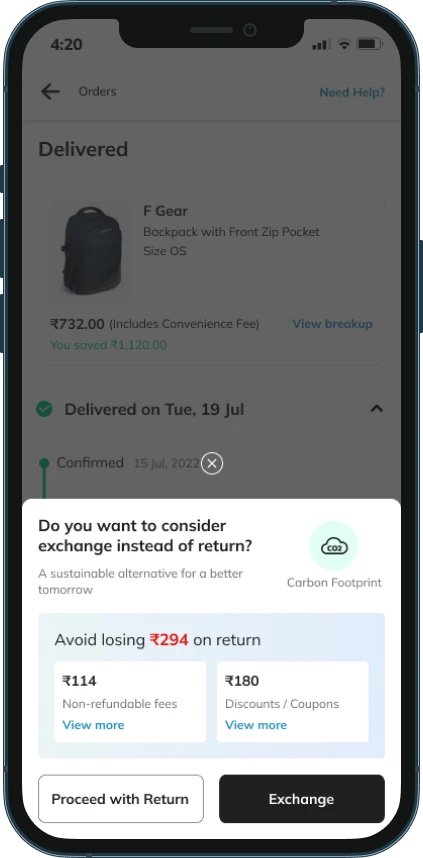
Three layers, three reasons
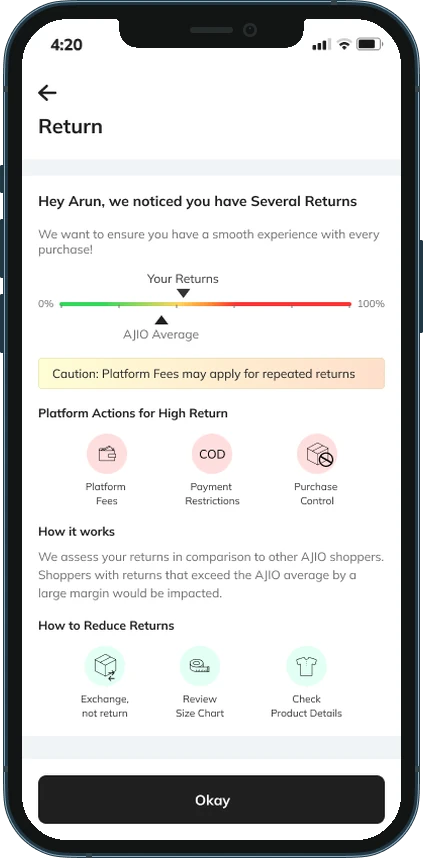
Different users need different reasons. Sustainability for those money doesn't move, the real cost for those who hadn't added it up, and their return rate for repeat returners.
Scaled to the cost
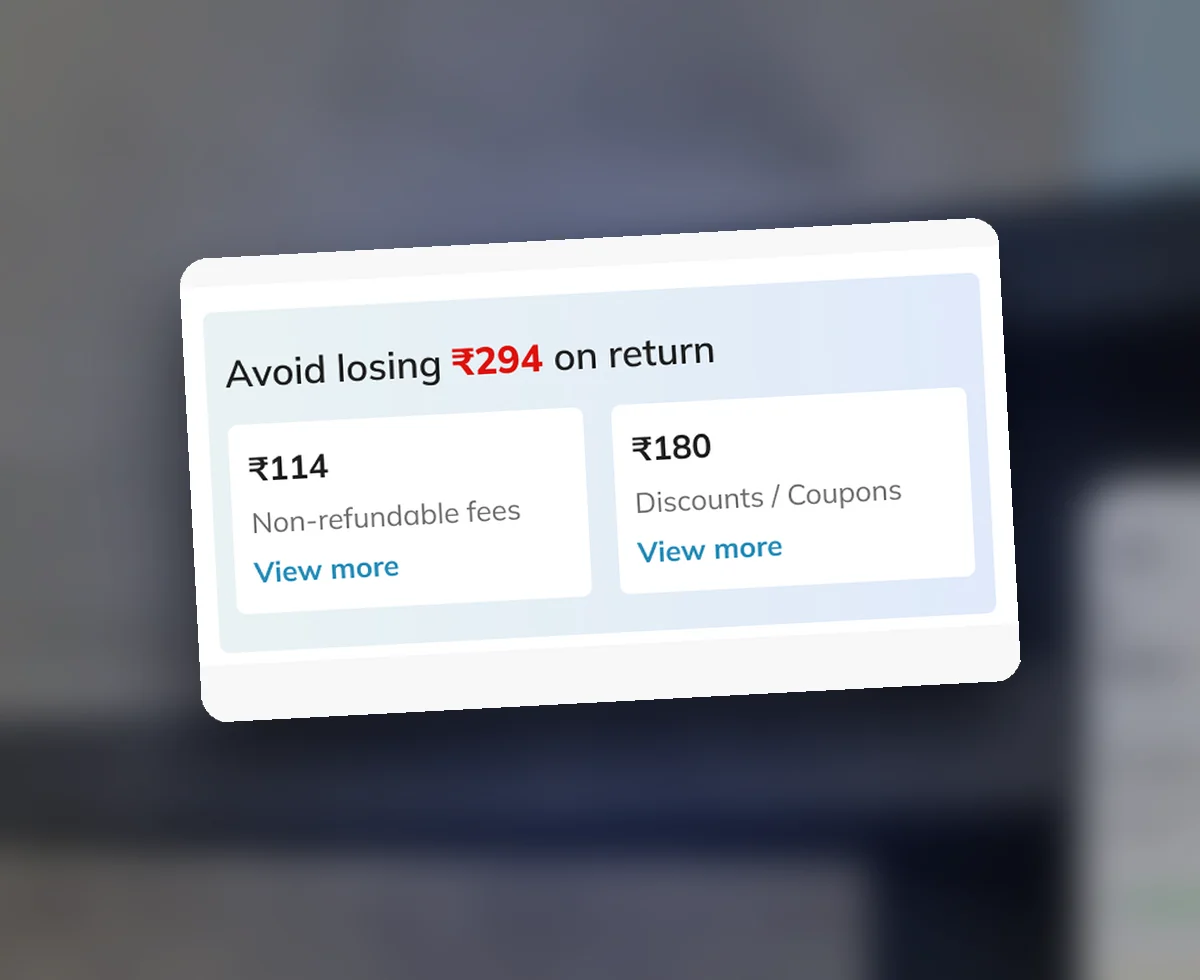
When fees applied, the sheet showed the ₹294 at stake, from the user's own order. With no fee, one line appeared the moment someone picked “Size / Fit issue”: we'll exchange it promptly.
Return stays one tap away
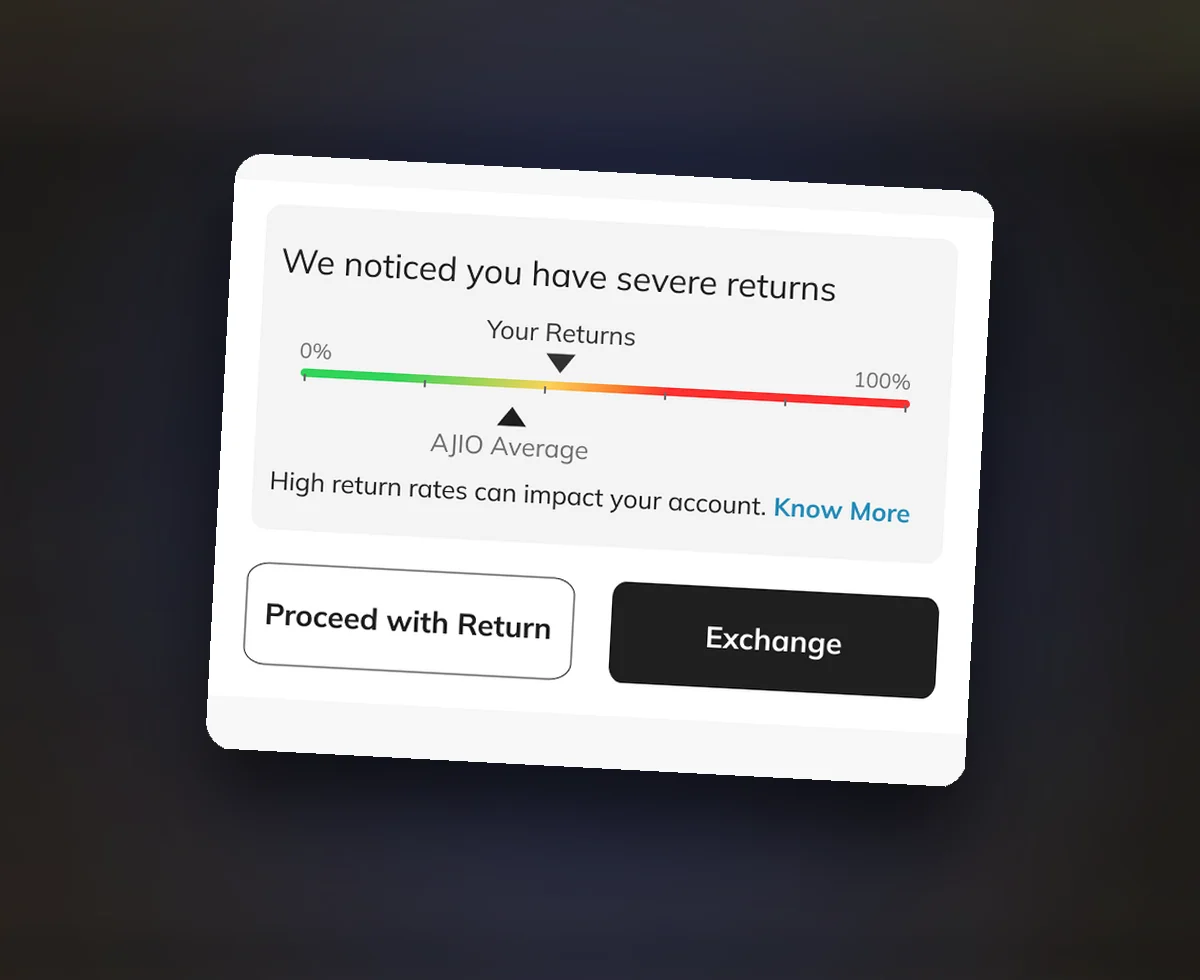
“Proceed with Return” sat beside “Exchange” as an equal button. The nudge eased off after repeated dismissals. Nothing was blocked, which is why users trusted it.
One sheet, adapted to each user's context
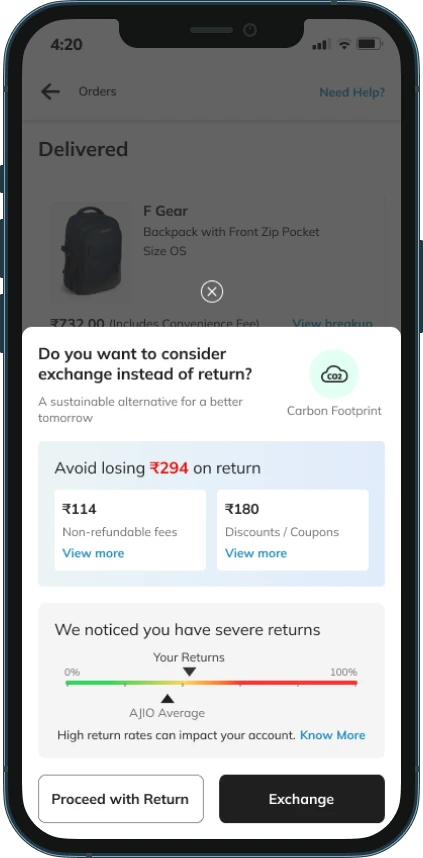
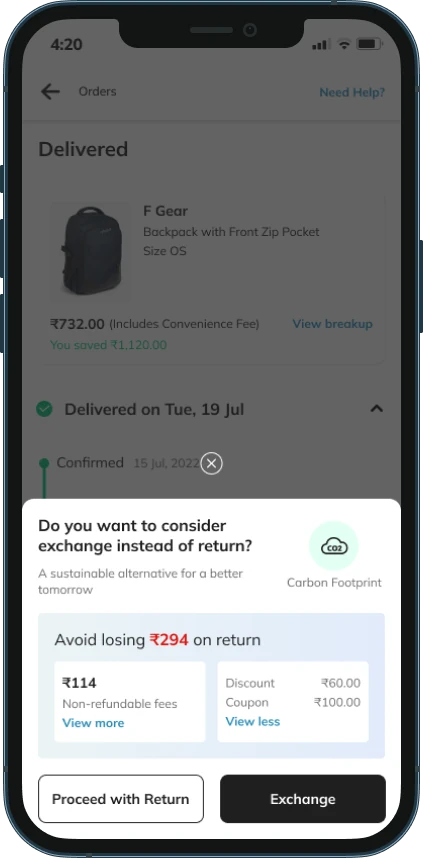
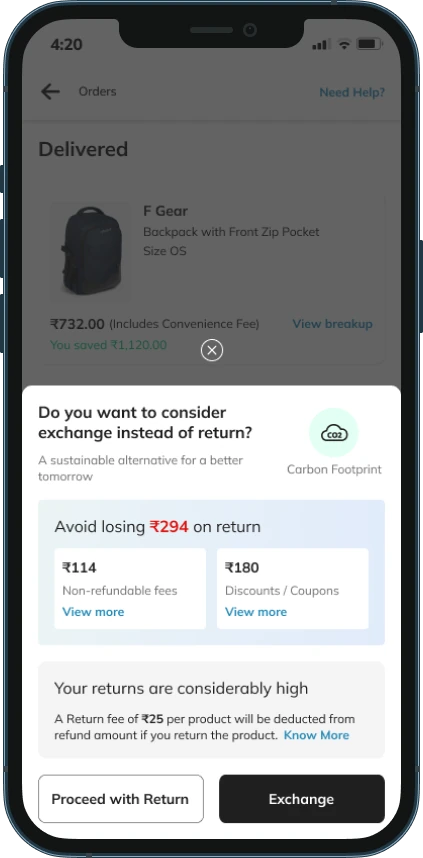
Most shoppers who started a return saw the nudge, and 7 lakh+ chose to exchange instead. Drop-offs and complaints stayed flat.
Returns that became exchanges instead.
Kept as orders rather than refunded.
Came through this one nudge.
How it was measuredOver the 12 months after launch, against the exchange share before the nudge. Drop-offs and complaints were tracked over the same period.
What if an exchange didn't have to be the same product? Smart Swap lets a shopper trade any delivered item for anything else on AJIO. Designed, now in development.
Onboarding
Three screens: what it is, why it helps, how it works.
Browse
Listing with the address pre-filled and a persistent Smart Swap bar.
Cart
Item going back and item coming in, side by side, with the price difference inline.
Confirm
A Smart Swap card on the thank-you page and in order tracking.
/ What I learned
A nudge isn't a component. It's a system. Copy, timing, eligibility and business rules all decide whether it works. Change one and the result changes.
He independently reconstructed customer journeys, mapped business rules, identified edge cases, and built a clear understanding of the platform without slowing down delivery. Despite the complexity, he never missed a sprint commitment. In a relatively short period, Arun became the go-to designer for AJIO's Payment and Post-Order experiences.
 Senior ManagerAJIO Product & Design

Discovery
Checkout
Post-order
Conversion
Conversational UI
Behavioural design
Systems design
Design systems
0→1
B2B
Personalisation
Payments
Interaction design
Product thinking
Growth