


GST Enablement
Opening a consumer checkout to business buyers, in three phases. Invisible to everyone who doesn't need it.

/ Overview
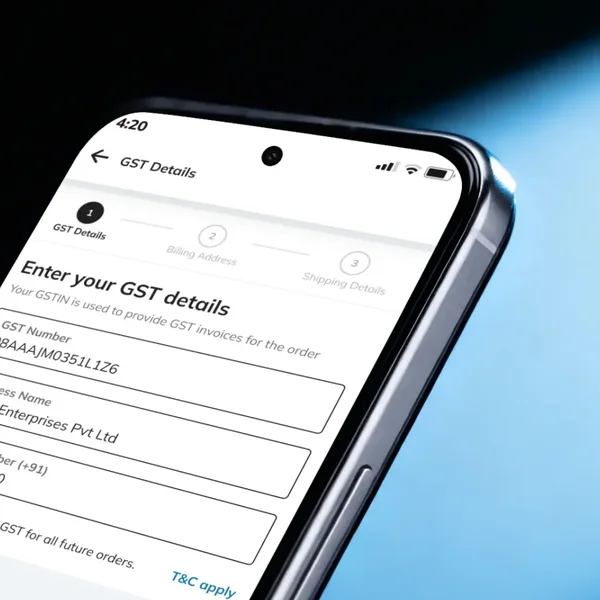
Business buyers need a GST invoice to claim input tax credit. AJIO only issued consumer invoices, so every business buyer who reached checkout had to leave. I took a one-page PRD and designed the GST layer of checkout: identity, address, eligibility and invoicing, shipped in three phases over a year.
/ Project details
1 lakh+
business orders with GST invoicing
~11×
the platform average order value
New
B2B revenue stream for AJIO
3
phases, from cart to order page
GST details, a fetched billing address, then shipping
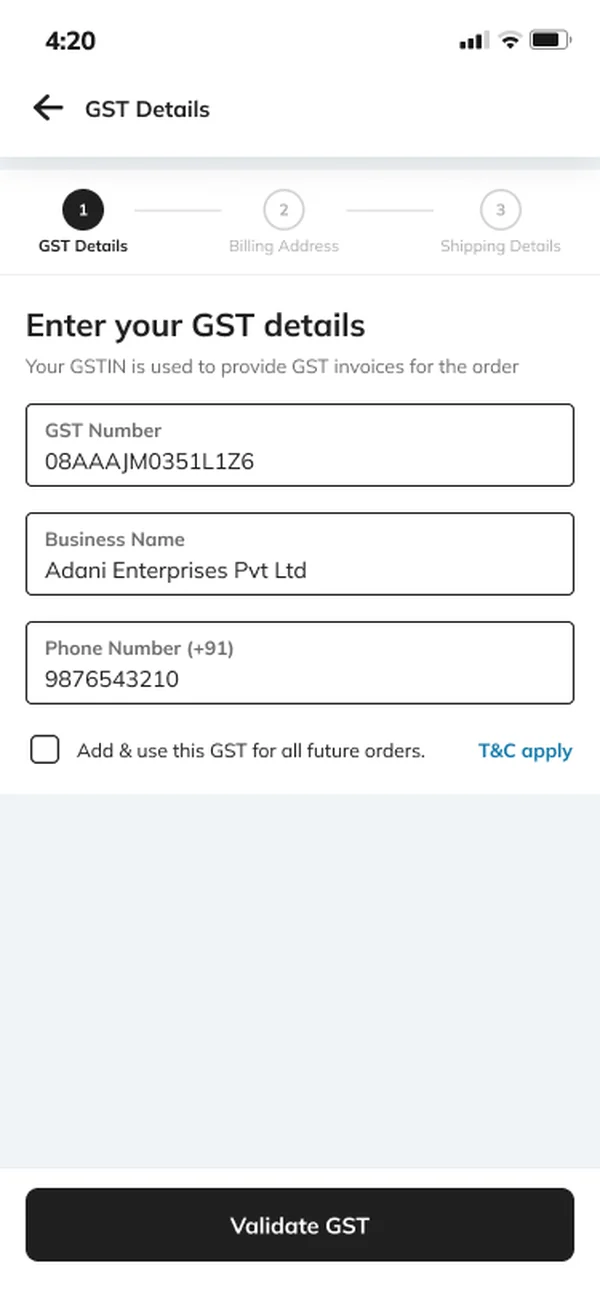
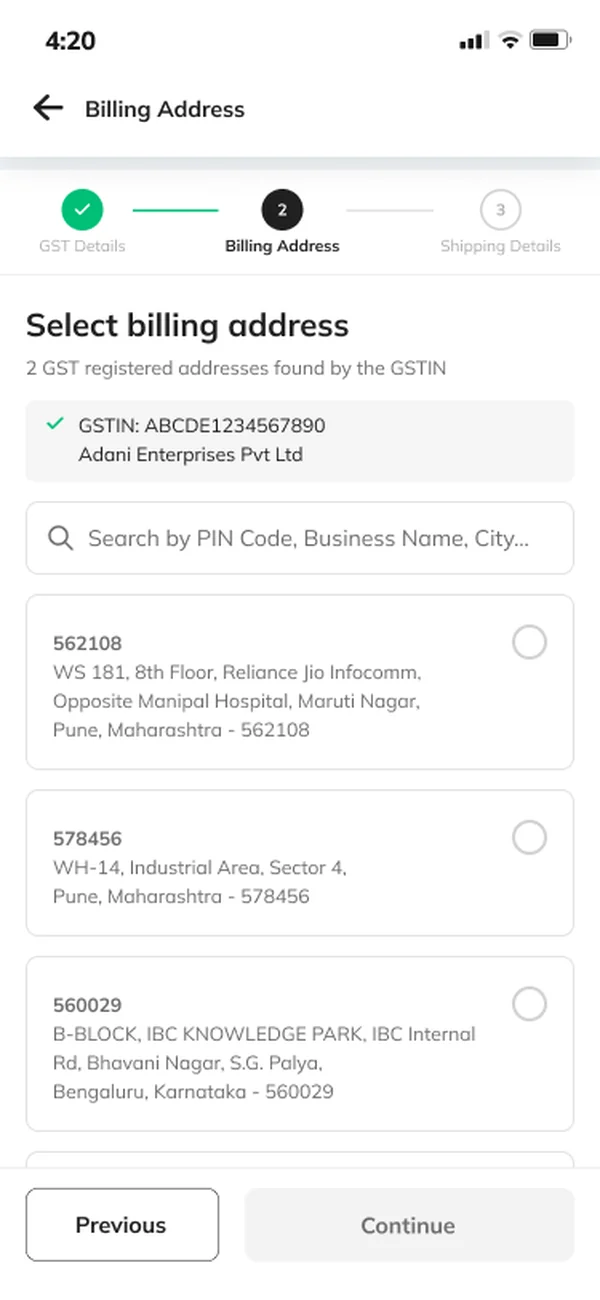
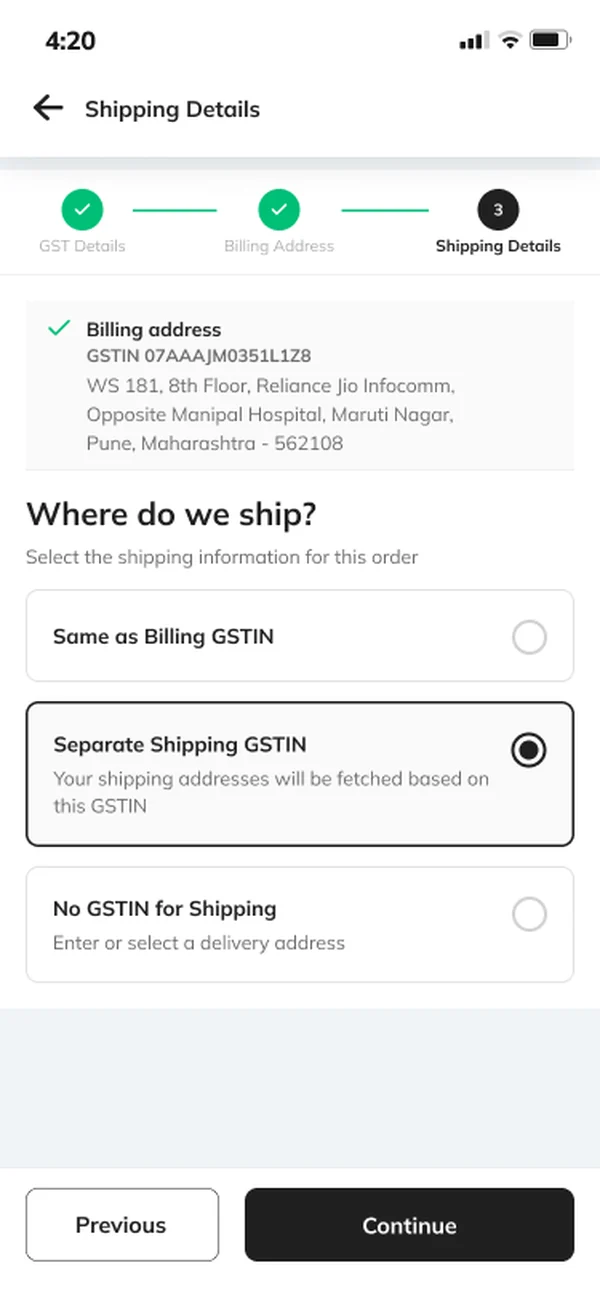
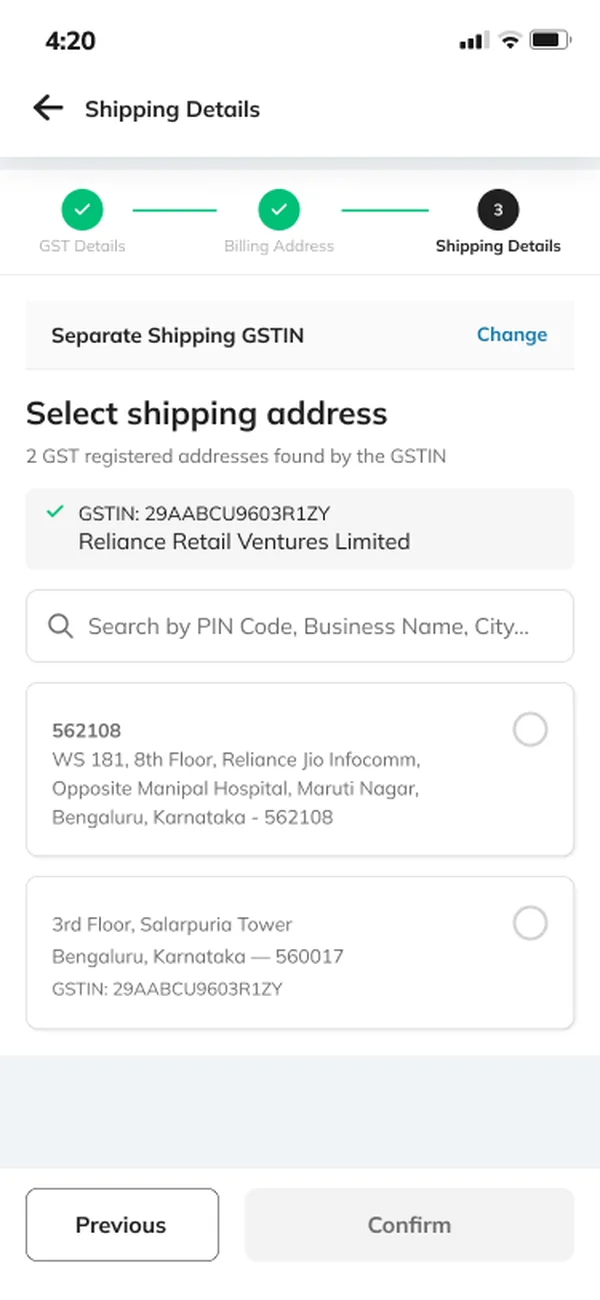
The checkout was built for one kind of buyer. Adding a business buyer couldn't slow down the 95%+ who would never touch GST.
Verify the business
A GSTIN and business name, checked before anything else in the flow.
Match the address
Billing has to match a GST-registered location, or the invoice is wrong.
Add a GSTIN field to checkout.
How do we build a B2B layer into a B2C checkout without anyone else noticing it?
Three phases.
Each one harder.
GST before address
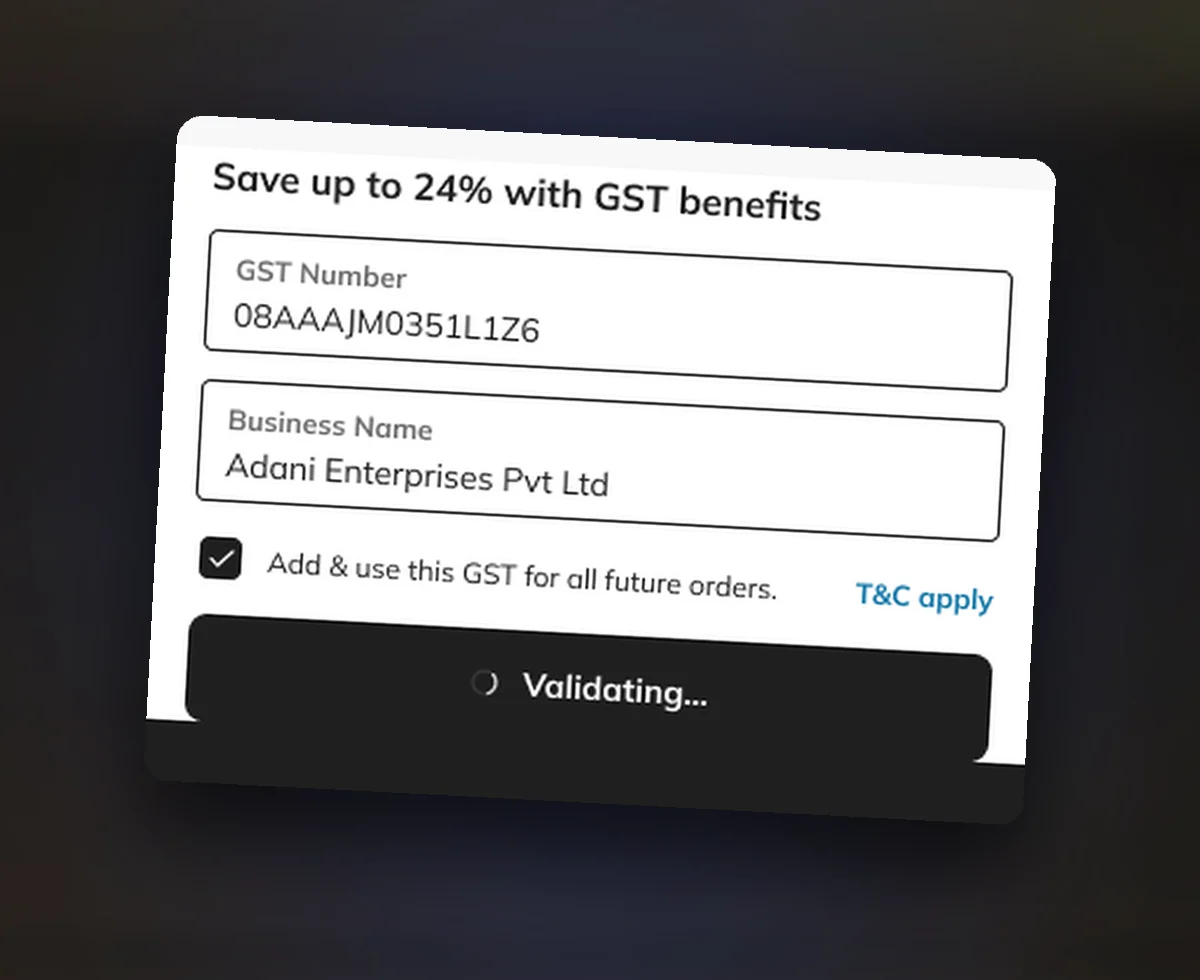
Phase 1, Sep 2025. A “Claim GST input credit” entry in the cart, for signed-in users only. GSTIN and business name are validated first, so the address can be checked against them. No silent failures, no wrong invoices.
Billing and shipping, separated
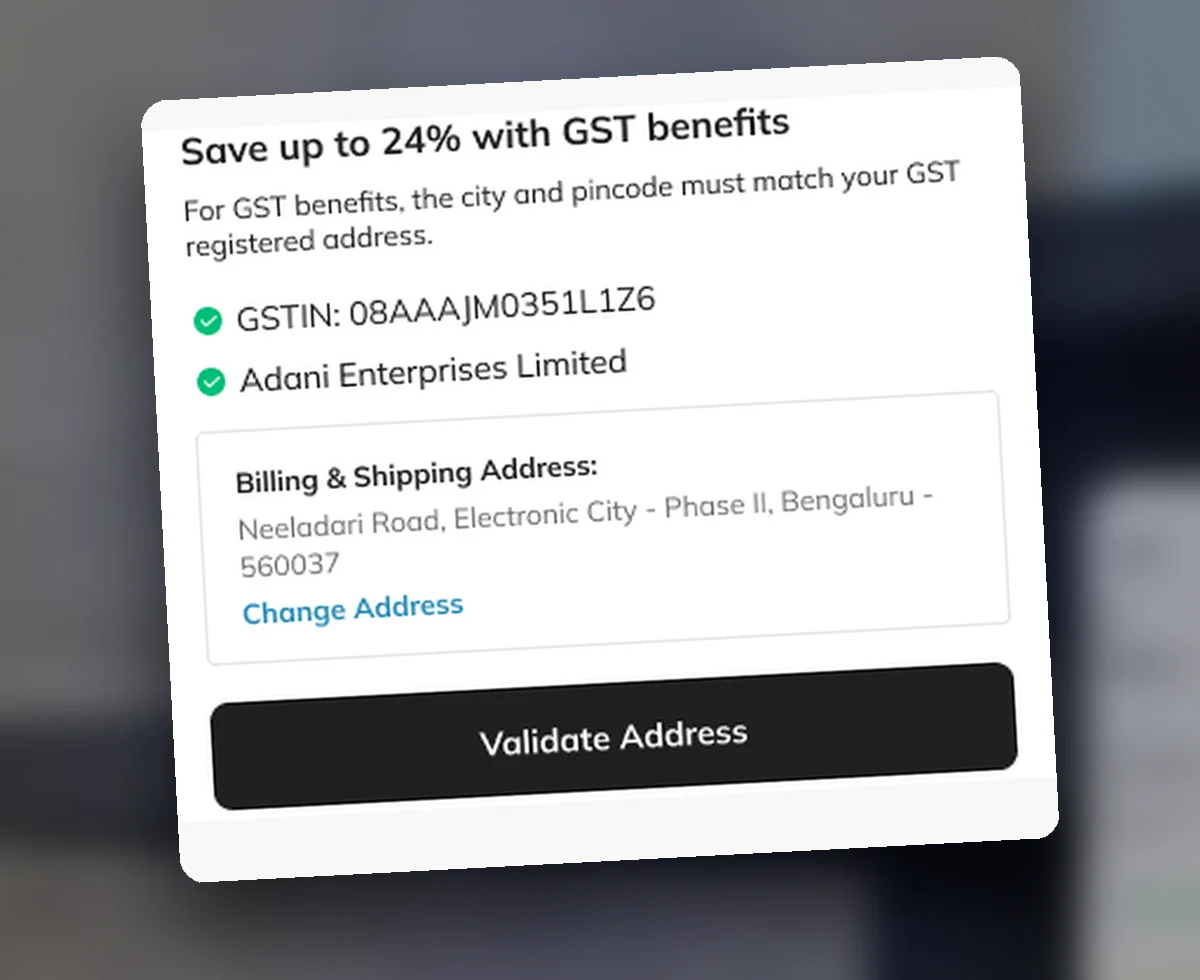
Phase 2, Oct 2025. Businesses bill from a registered office and ship to a warehouse. Billing is validated against the GSTIN; shipping only needs to be deliverable. GST details now follow the order into confirmation, order details and email.
Addresses fetched, not typed
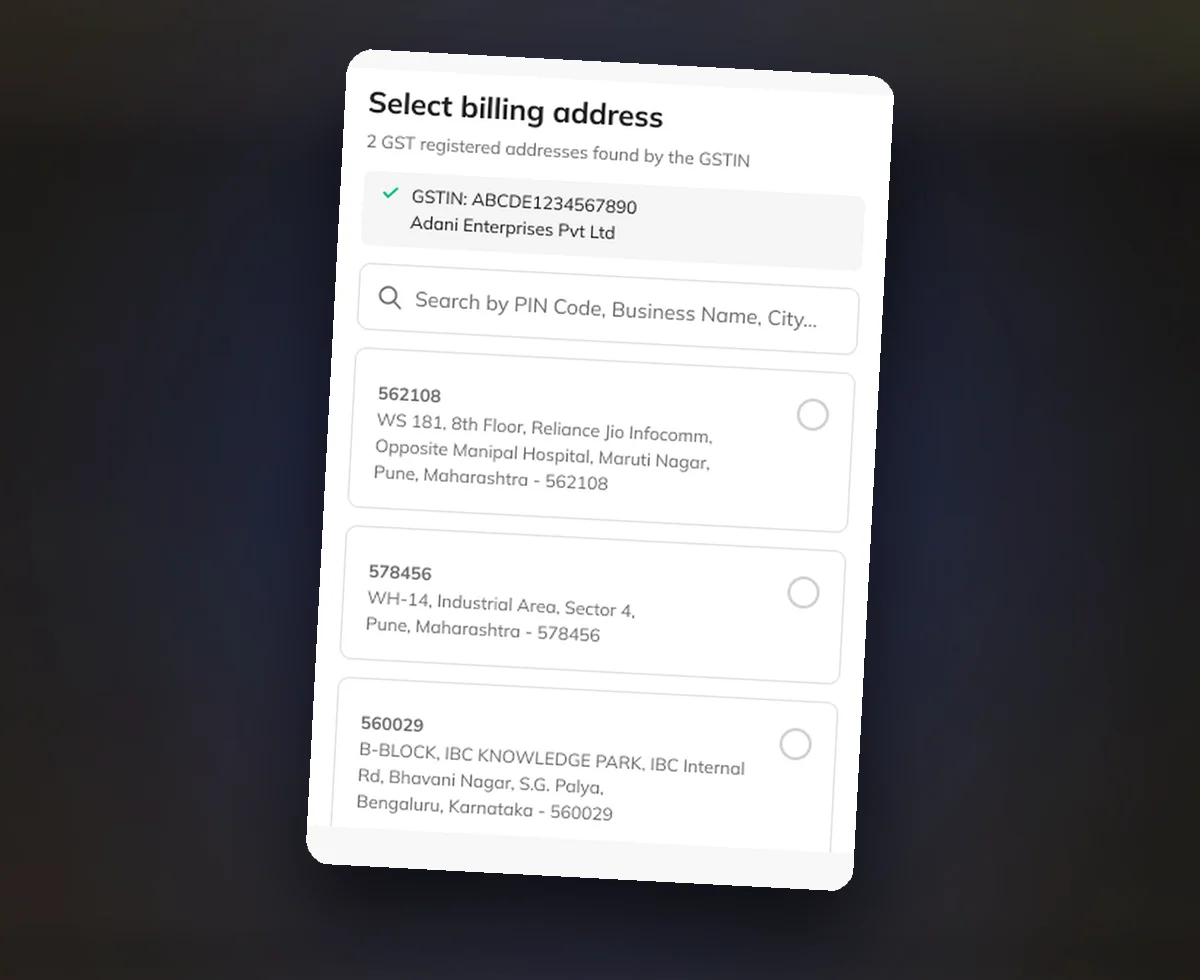
Phase 3, designed by Jun 2026 and live in Jul 2026. One mistyped character could fail validation. Now the registered addresses come back from the GST API and the buyer searches and picks one. Billing and shipping can each carry their own GSTIN.
Nothing was left to error handling. Every state a cart could be in got its own design.
Mixed cart
Non-GST items move to the wishlist if the buyer proceeds, so intent isn't lost.
RUSH delivery
GST isn't available for RUSH items, and that's shown before any validation starts.
Above ₹2 lakh
PAN becomes mandatory and must match the GST name, with autofill for repeat buyers.
API down
A fallback flow, so checkout keeps working when the GST service doesn't.
A buyer AJIO had never been able to serve. At around 11× the platform's average order, these are procurement decisions, not fashion purchases.
Since launch, across Android, iOS and web.
Orders from business buyers AJIO couldn't serve before.
Against the platform average.
How it was measuredBusiness orders counted since the first phase launched, across Android, iOS and web. Order value compared with the platform average.
/ What I learned
B2B inside B2C is a systems problem, not a UI problem. Validating GST before the address in Phase 1 is what made dual GSTINs possible in Phase 3. Design the system, then the screens.




Discovery
Checkout
Post-order
Conversion
Conversational UI
Behavioural design
Systems design
Design systems
0→1
B2B
Personalisation
Payments
Interaction design
Product thinking
Growth