Fitcode
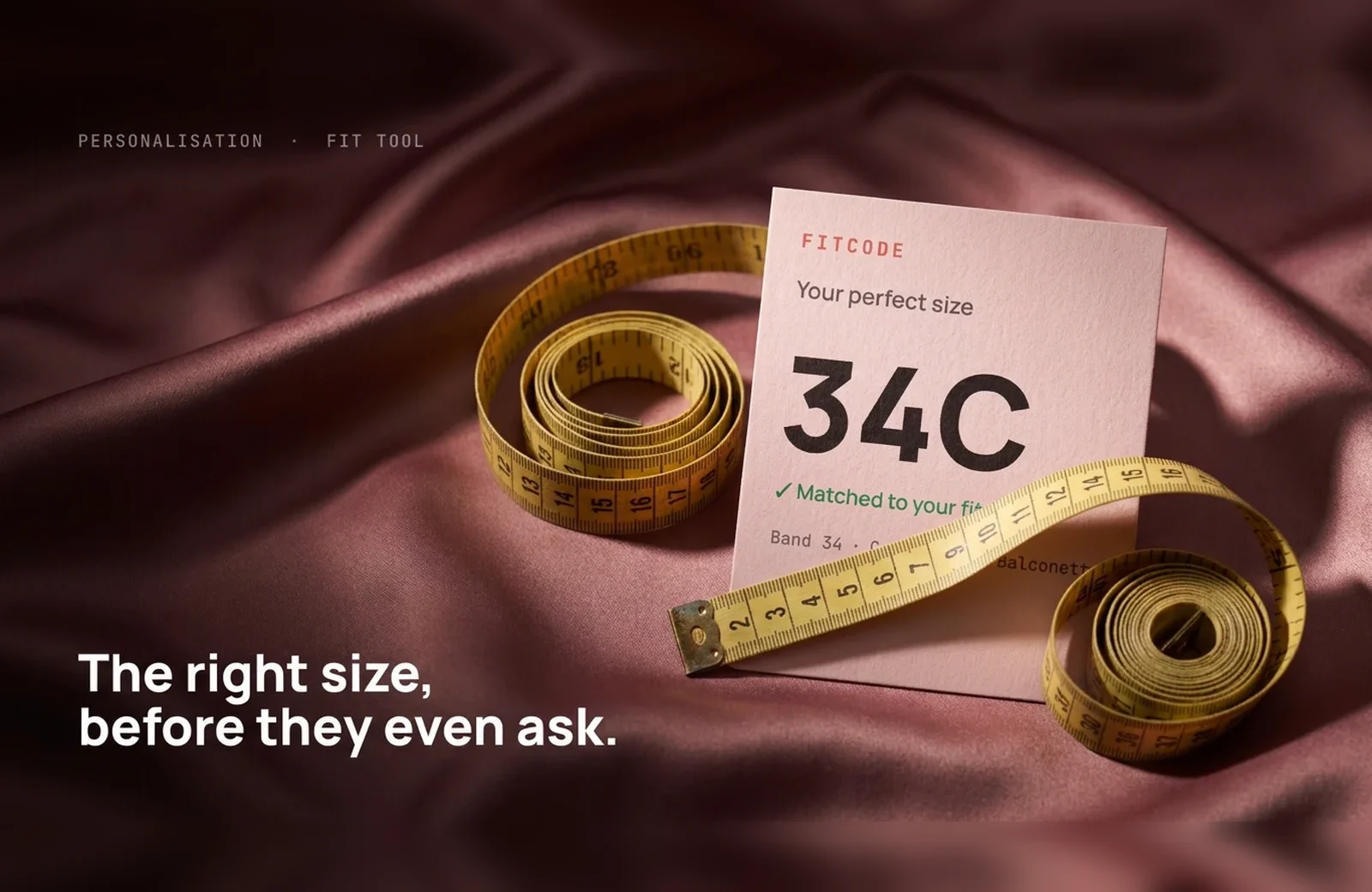
Zivame's fit tool, rebuilt around how a bra feels, not how to measure. Used by 1.8 million women.
/ Overview
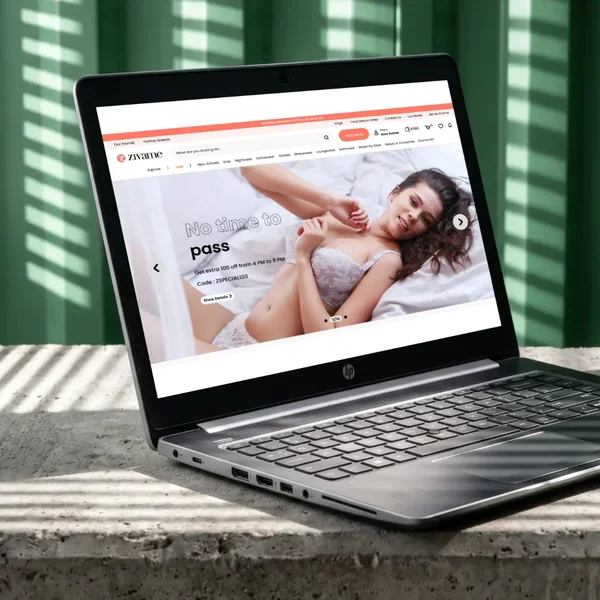
Fitcode existed, but its generic questions produced recommendations people didn't trust, the flow was long, and there was no desktop version. Low trust meant low adoption, which meant wrong sizes and returns kept coming. I redesigned what it asks, how it answers and where it shows up.
/ Project details
1.8M+
women used Fitcode
+7%
conversion lift
4
touchpoints in the journey
An acknowledgement, three steps, a result you can act on
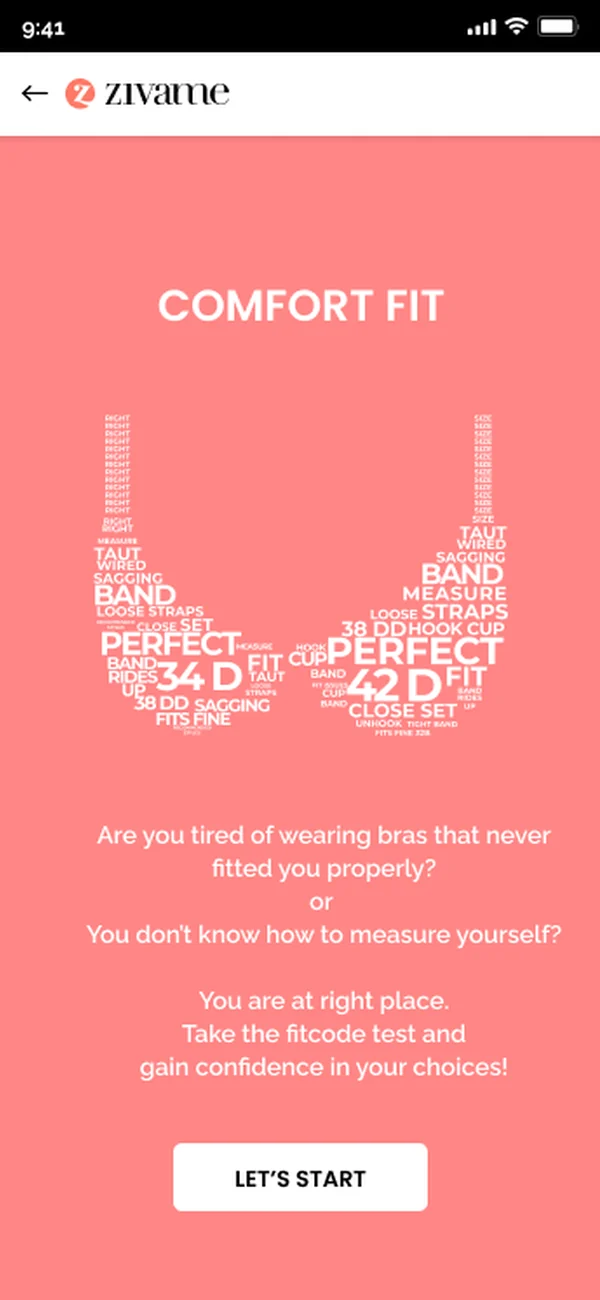
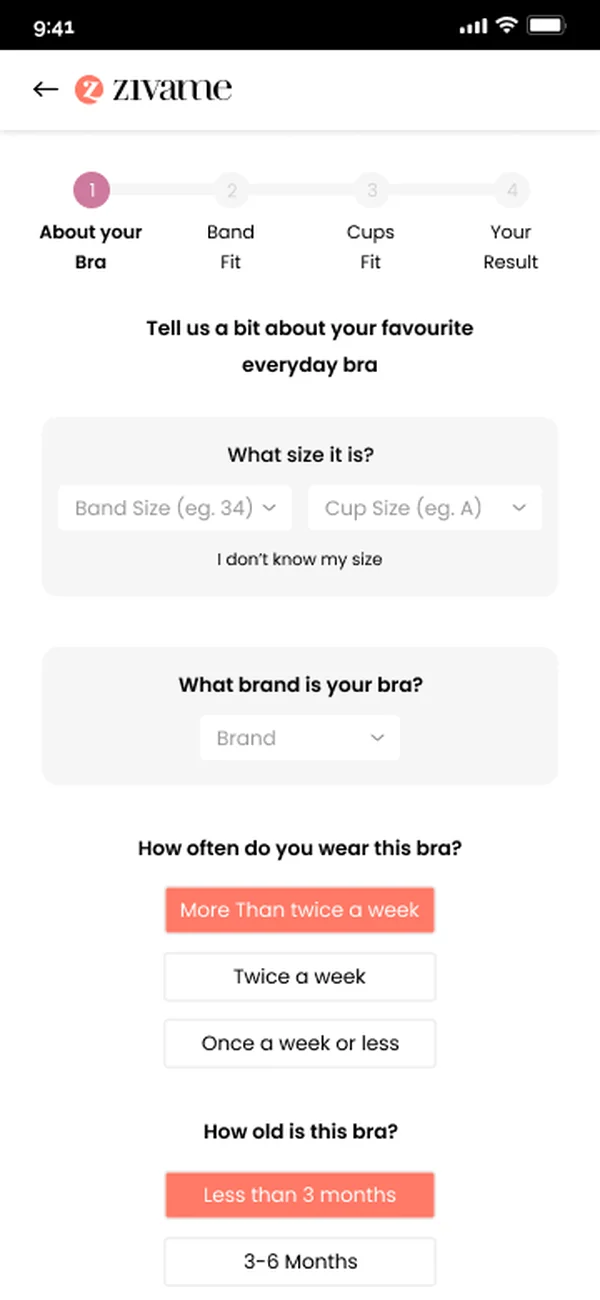
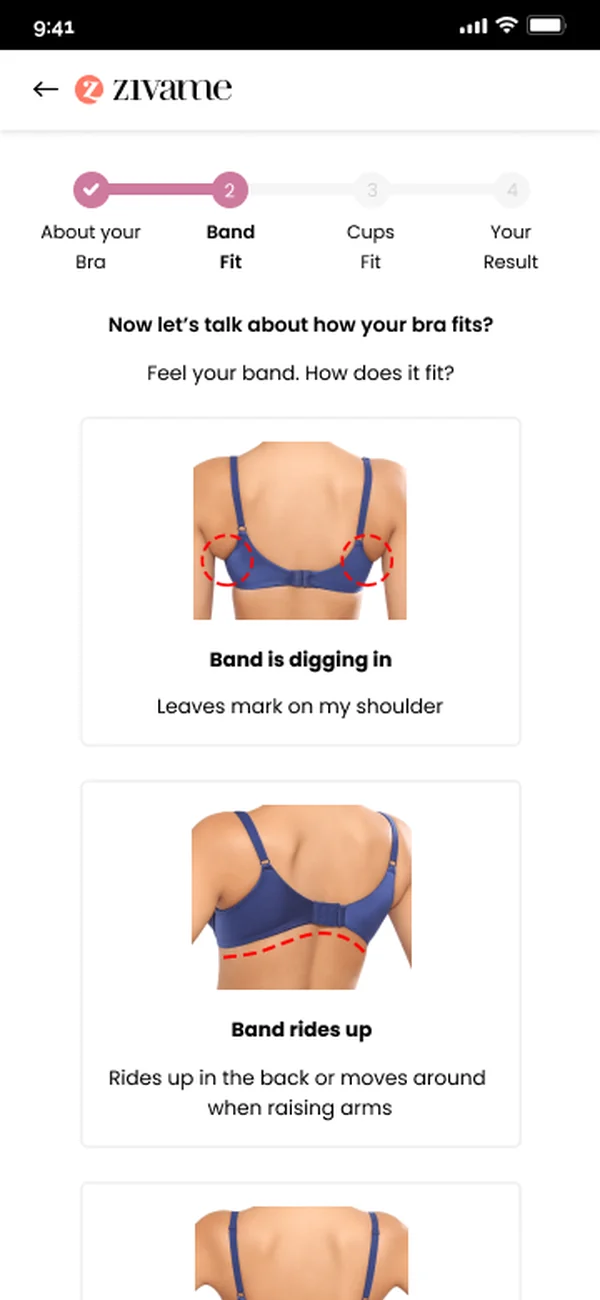
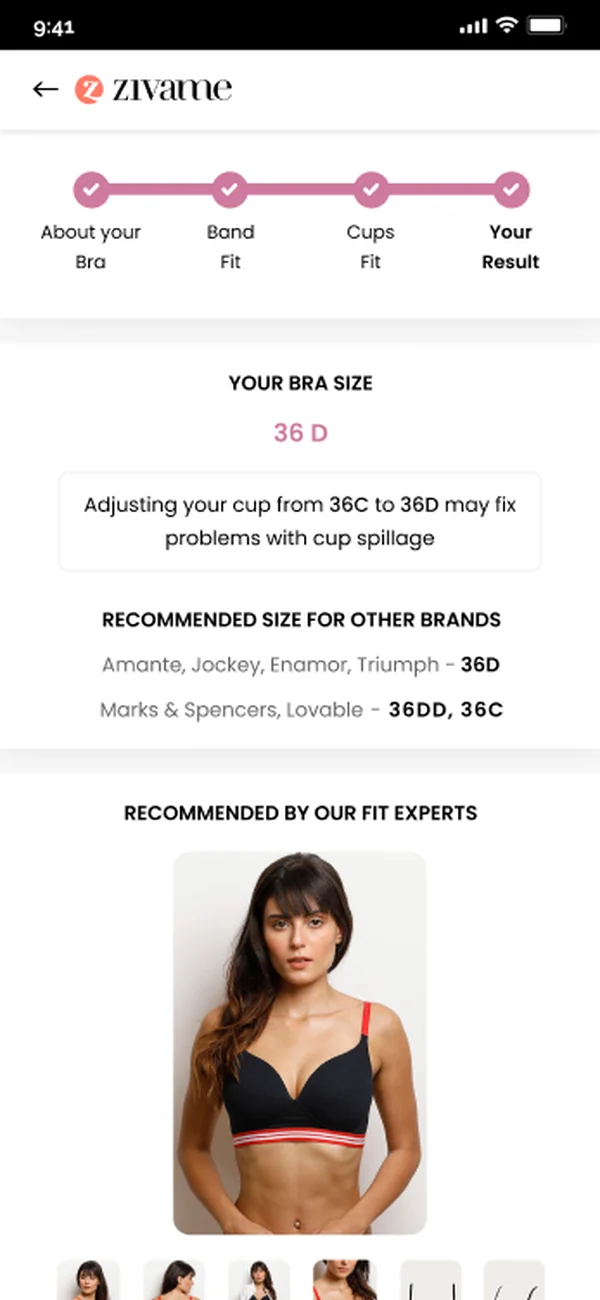
Most women wear the wrong bra size, and the tool wasn't fixing that. It asked questions people couldn't answer accurately without a tape.
Ask for measurements.
Ask what wearing their bra feels like, and infer the size.
Start with empathy.
End with confidence.
An opening that understands
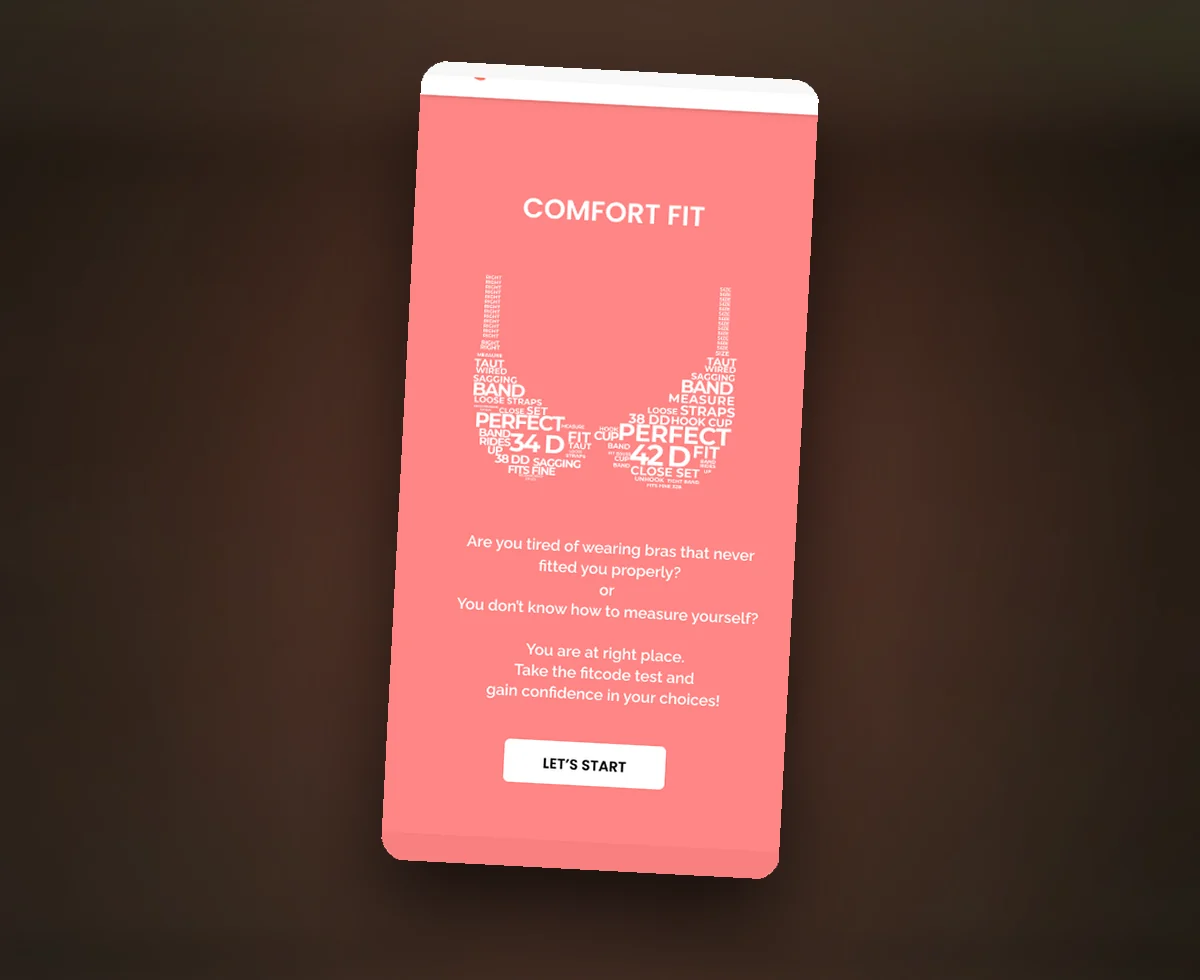
“Are you tired of wearing bras that never fitted you properly?” A bra drawn from fit terms (band rides up, loose straps) shows the tool knows fit in detail.
Describe the feeling
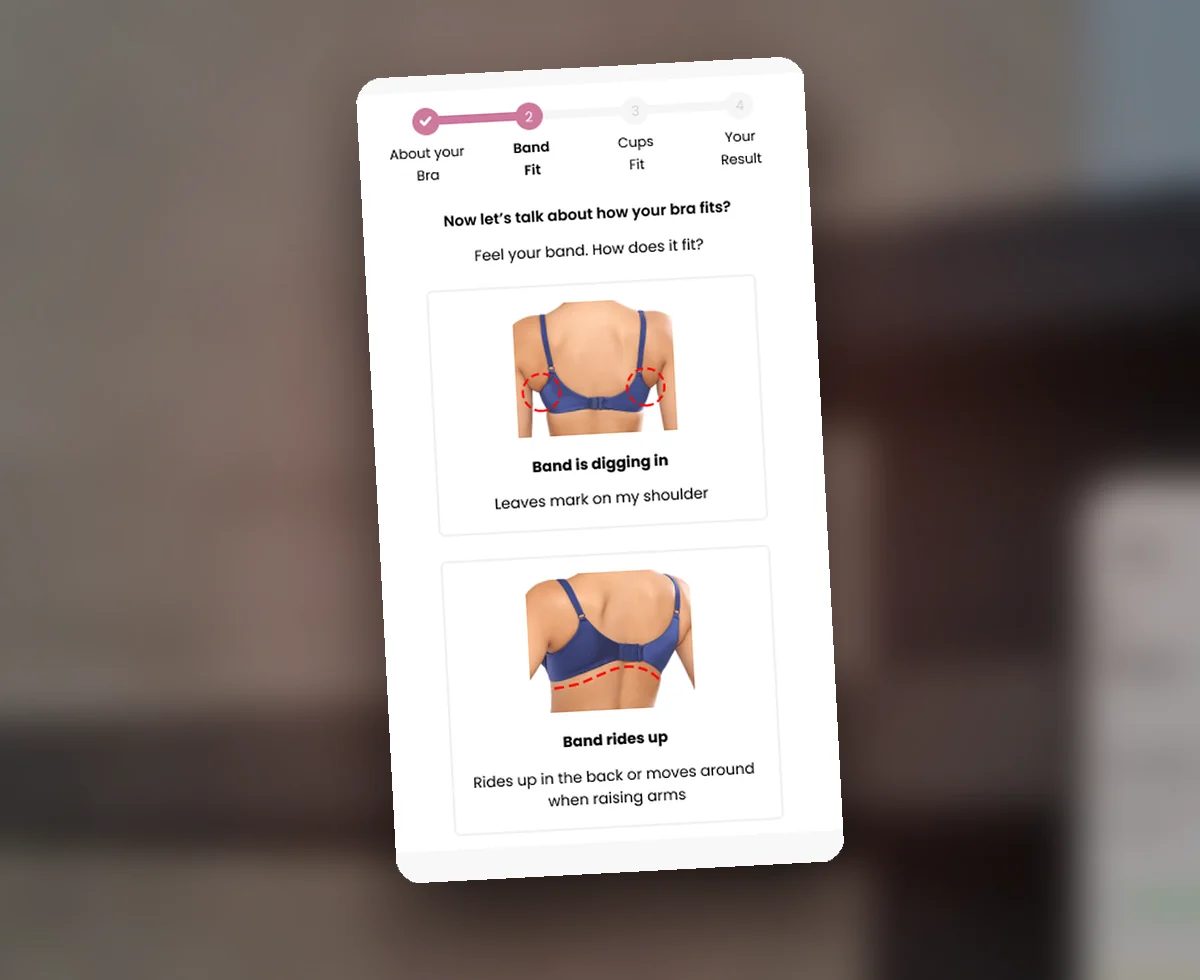
Band digging in, riding up, or fitting fine. Each answer illustrated, so users recognise their experience instead of describing it.
Two paths, one result
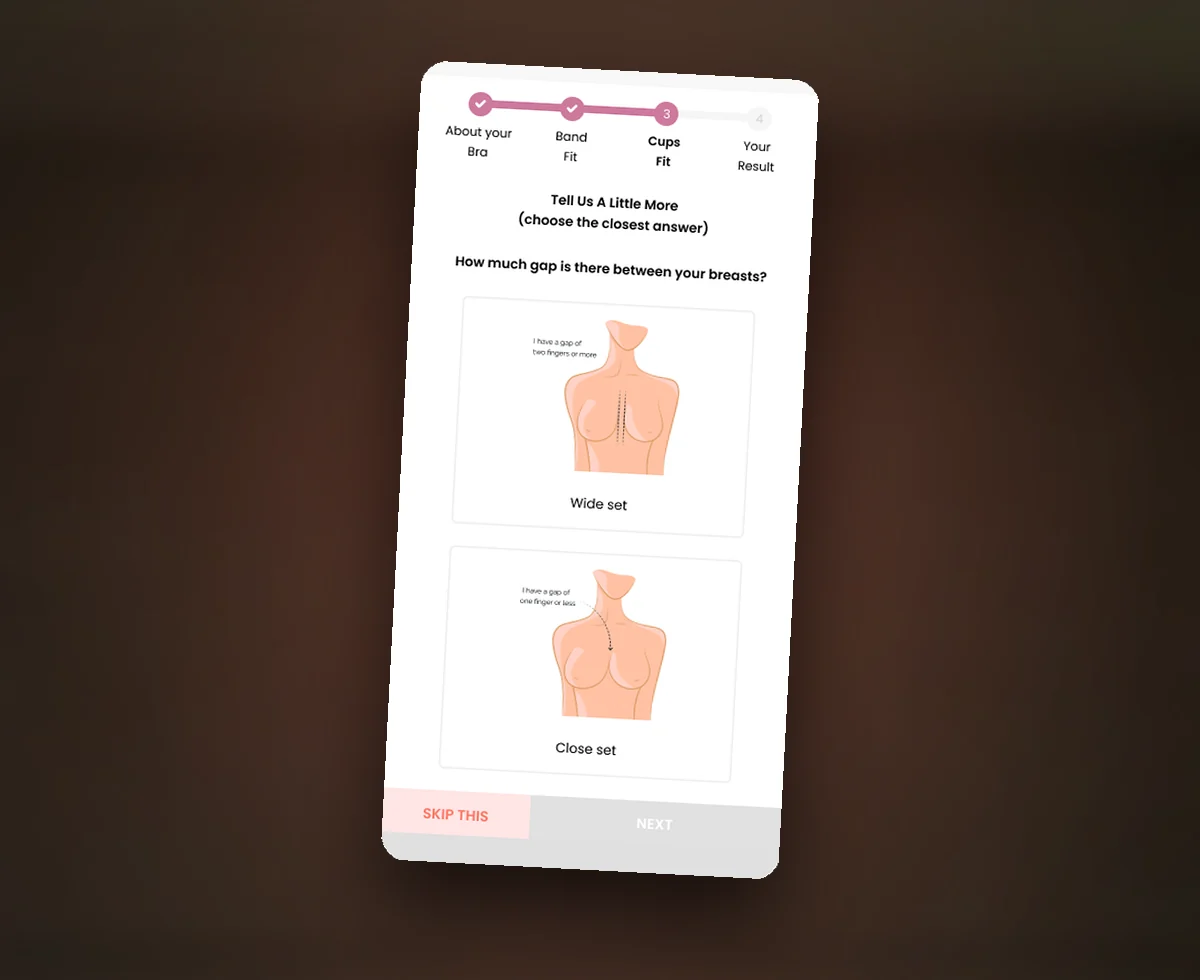
No tape: infer from symptoms. With a tape, or “I don't know my size”: measure. Both lead to the same result screen.
A result worth trusting
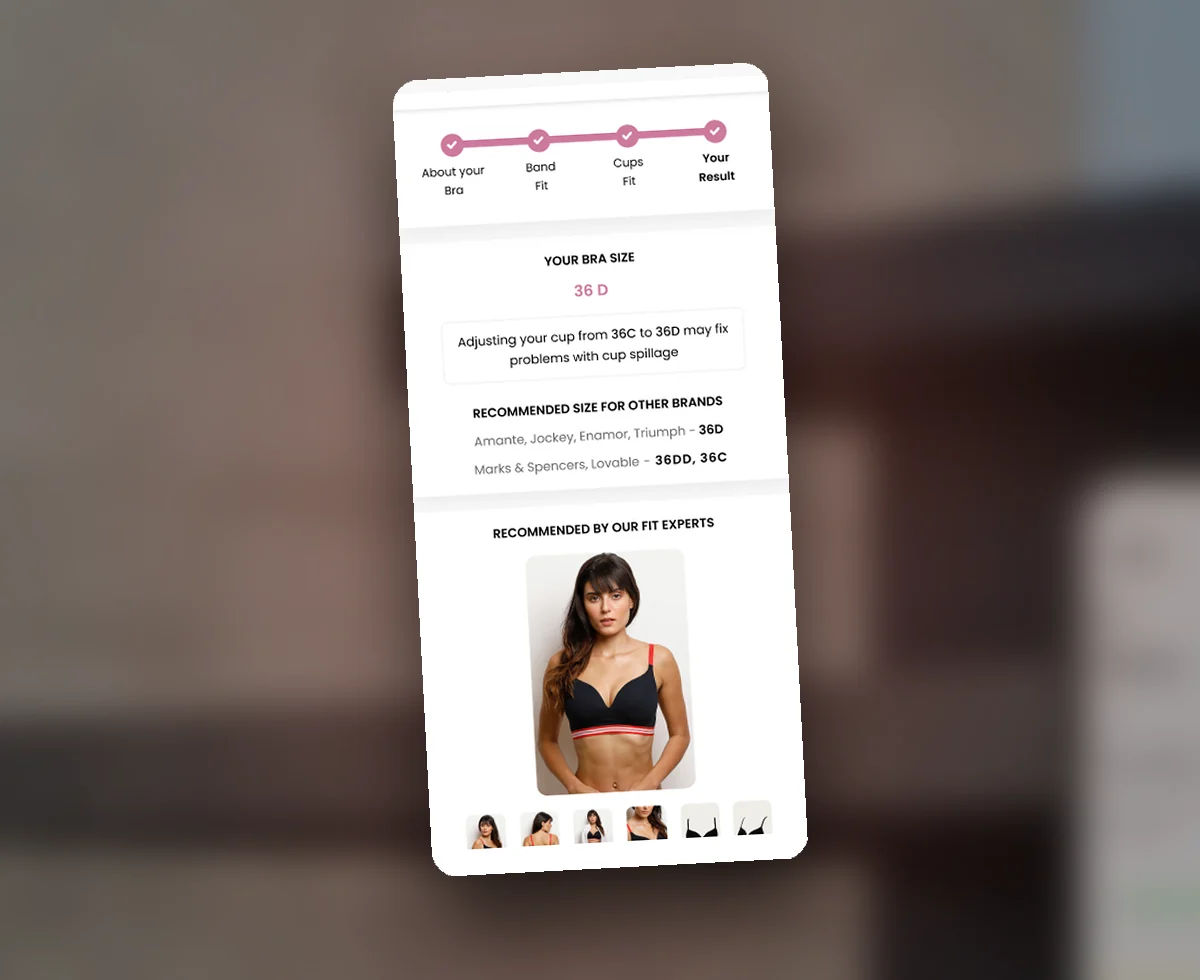
Recommended size, the fit issues found, and styles that suit. Not just “you're a 34B”, but why the old bra didn't fit.
The recommendation follows the user to wherever it can change a decision.
Product page
Recommended size pre-highlighted in the size picker, or a “Find my fit” link.
Listings
Filtered to sizes and styles that fit the profile.
Cart
One more chance to catch a wrong size.
Homepage
A “Find my fit” entry for people who haven't taken it yet.
Fit confidence turned into purchases.
After the relaunch.
Users who know their size complete the purchase.
Product page, listings, cart and homepage.
How it was measuredUsage counted after the relaunch.
/ What I learned
Empathy isn't a design style. It's a design constraint. The difference between collecting data and building confidence is what made this work.
Instead of relying only on assumptions or analytics, we visited multiple Zivame retail stores together, spoke directly with customers, and observed how they approached bra shopping. Rather than simply designing another recommendation flow, he focused on reducing anxiety and building confidence at every step of the journey.
 Design CoworkerZivame · FitCode Personalisation
Discovery
Checkout
Post-order
Conversion
Conversational UI
Behavioural design
Systems design
Design systems
0→1
B2B
Personalisation
Payments
Interaction design
Product thinking
Growth